Two Cultures Workshop: Law & Governance
About the Workshop
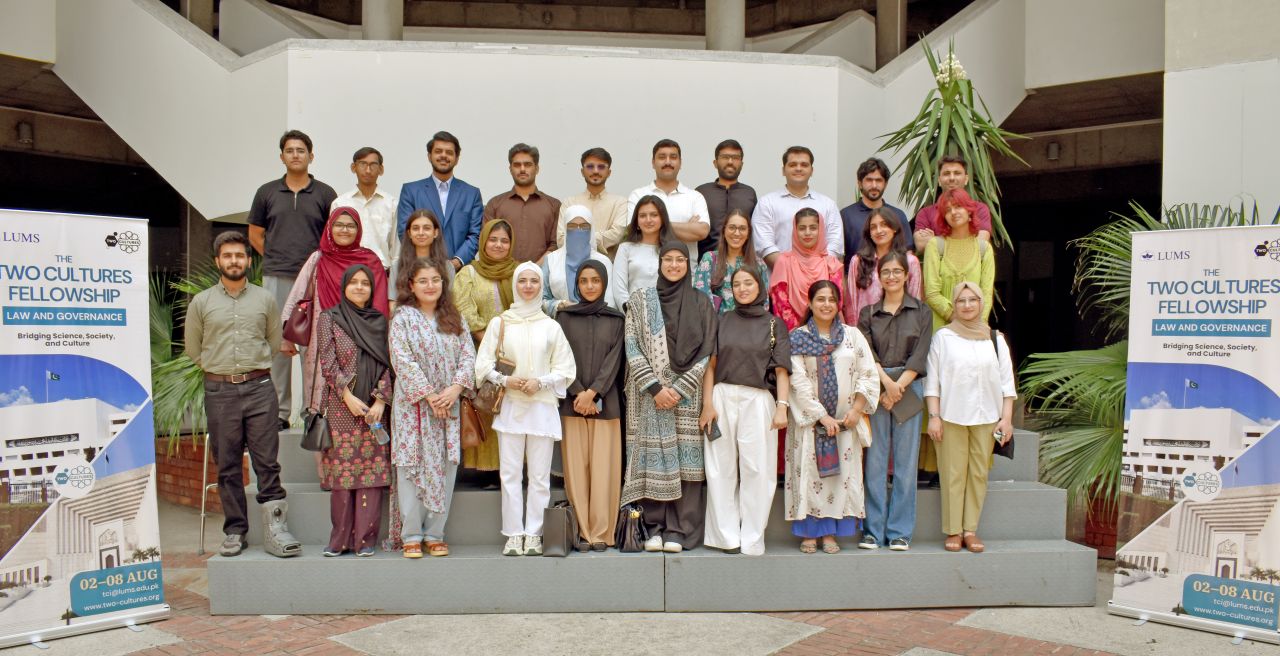
Two Cultures Workshop: Law & Governance was the second in the Two Cultures Workshop series, held at LUMS from 2 to 8 August 2026. Twenty-five participants were selected from over 2,300 applicants.
The workshop examined the institutions through which public authority is exercised in Pakistan. Law provides the formal architecture of rulemaking — defining authority, rights, and obligations — while governance represents the lived reality of how these rules are interpreted, implemented, and negotiated across institutions and societies. The effectiveness of a state depends not only on the quality of its laws, but on the capacity of its institutions and individuals to translate those laws into meaningful action.
Today this relationship is under strain in Pakistan from two interrelated crises. The first is a crisis in academic development: while entry into the civil bureaucracy and legal professions remains highly competitive, the broader academic ecosystem struggles to equip graduates with the intellectual tools required to navigate contemporary challenges — systems thinking, interdisciplinary reasoning, and the ability to engage with uncertainty. The second is institutional and intellectual fragmentation: there are few platforms that simultaneously cultivate rigorous analytical thinking while remaining attentive to the cultural, historical, and institutional contexts within which laws must operate.
These challenges are compounded by the legacy of post-colonial development, where institutional frameworks and policy paradigms have often been inherited or adapted from contexts that do not fully align with local social, cultural, and historical realities. The result is a persistent gap between the design of laws and their implementation on the ground.
The workshop brought together jurists, civil servants, scholars, and practitioners to examine these questions — and to ask what would have to change for the domains of law, administration, and the academy to work together rather than around one another.
Sessions
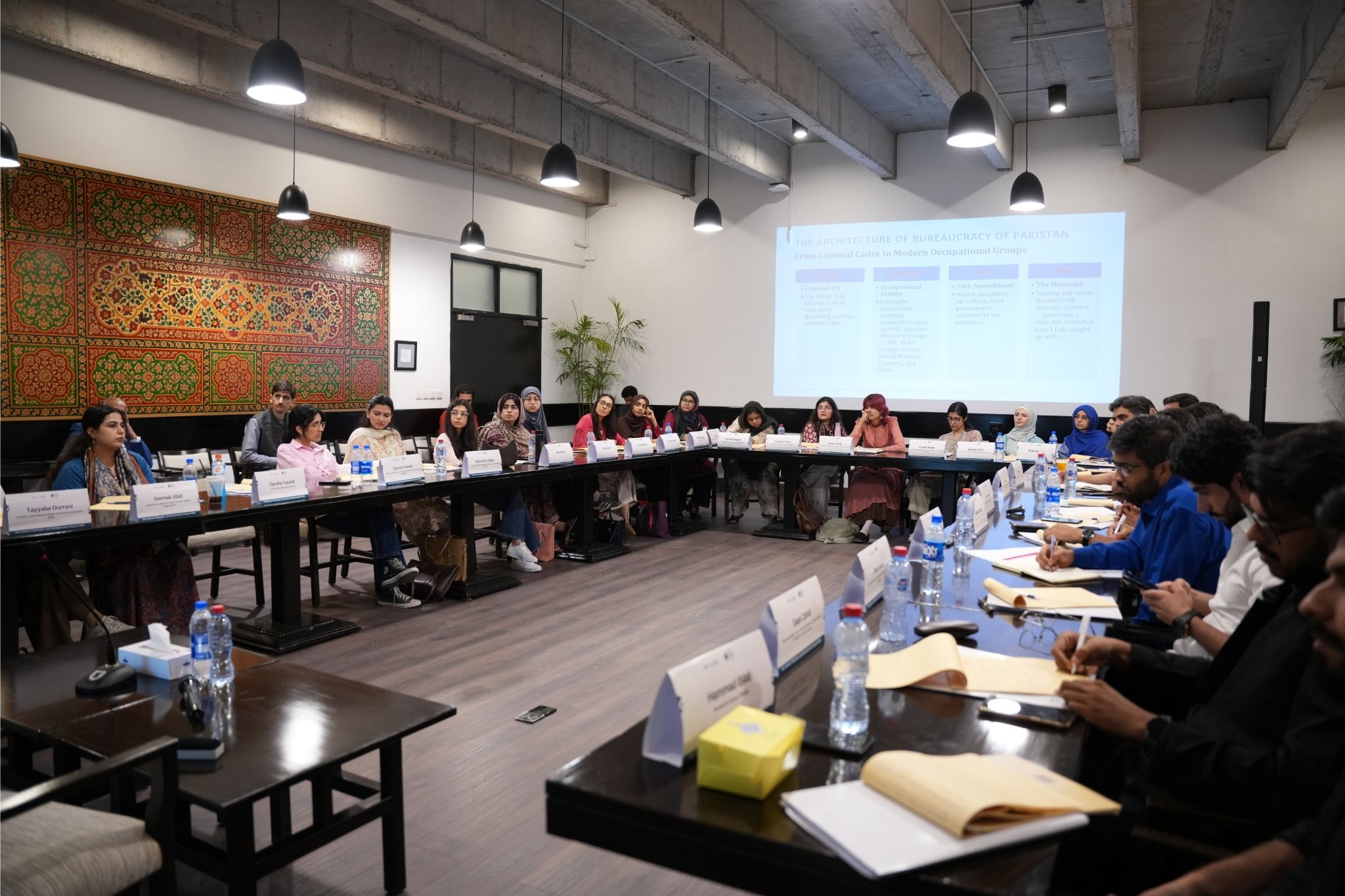
The Political Economy of the State
Dr. Muhammad Ahsan Rana
Associate Professor of Social Policy, Suleman Dawood School of Business, LUMS
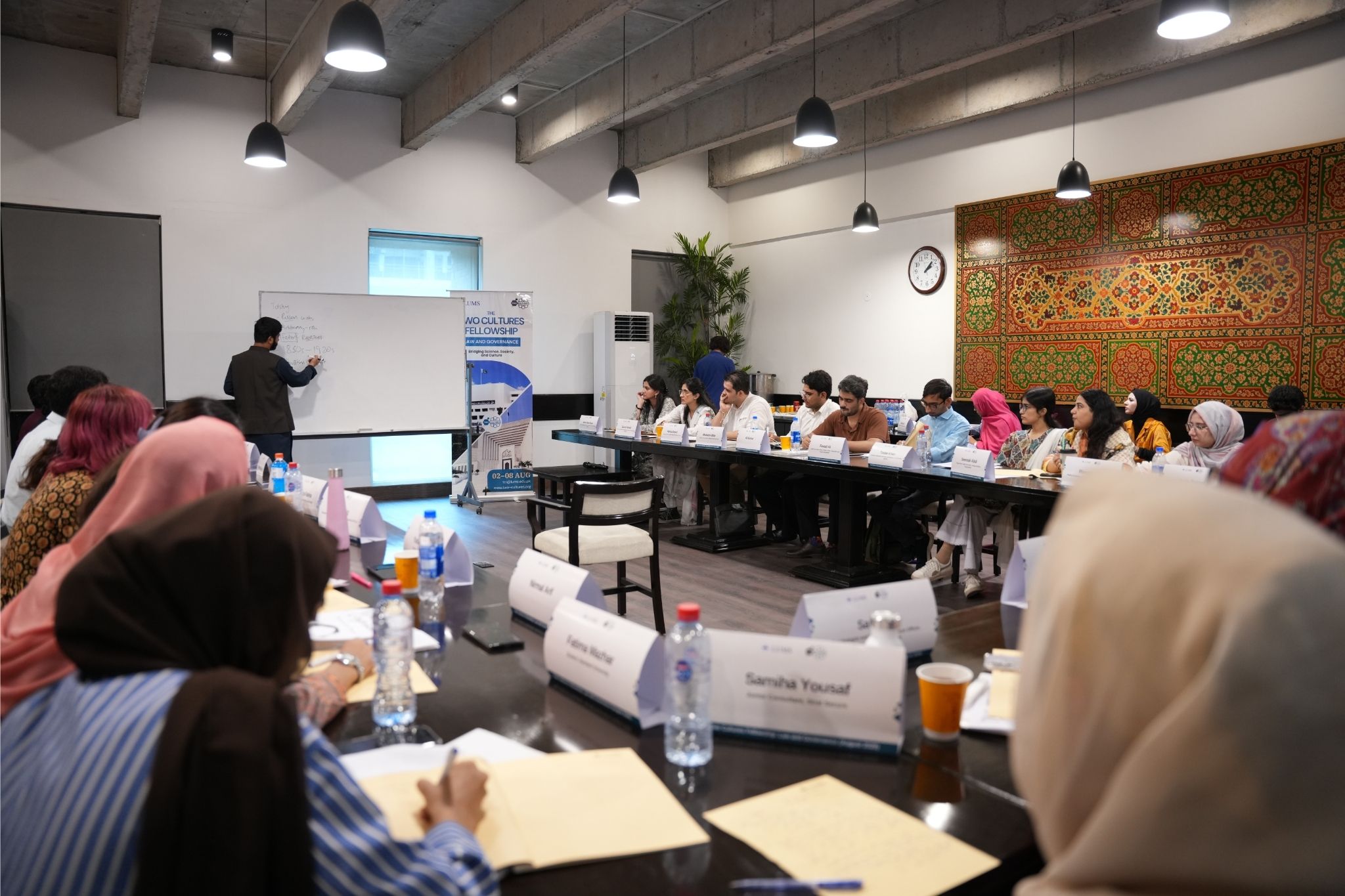
Leadership & Self Development
Ammar Qaseem
Research Fellow, Two Cultures Institute · Week-long stream
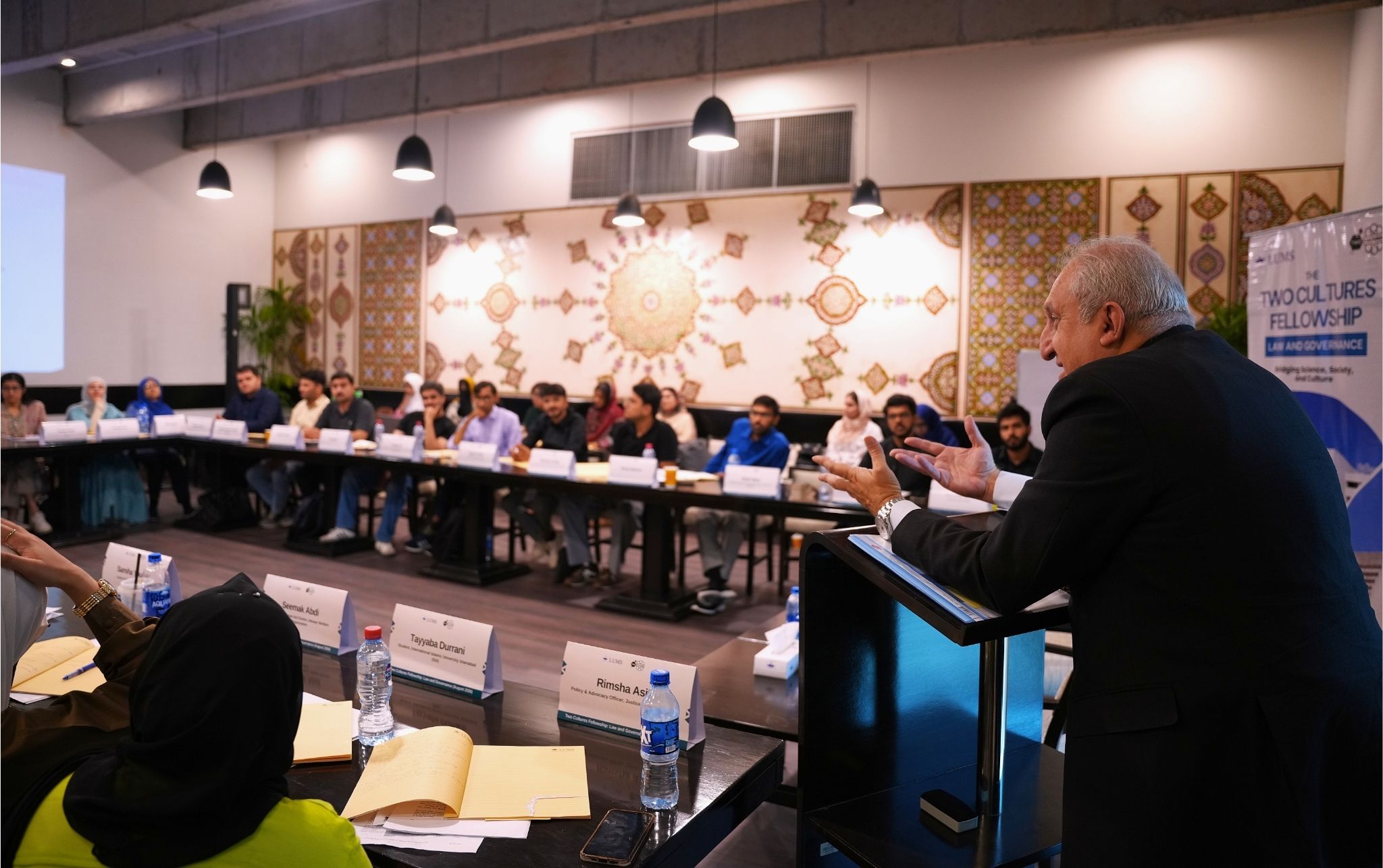
The Civil Service from the Inside
Mr. Farhan Aziz Khawaja
Director General, Civil Services Academy
Read more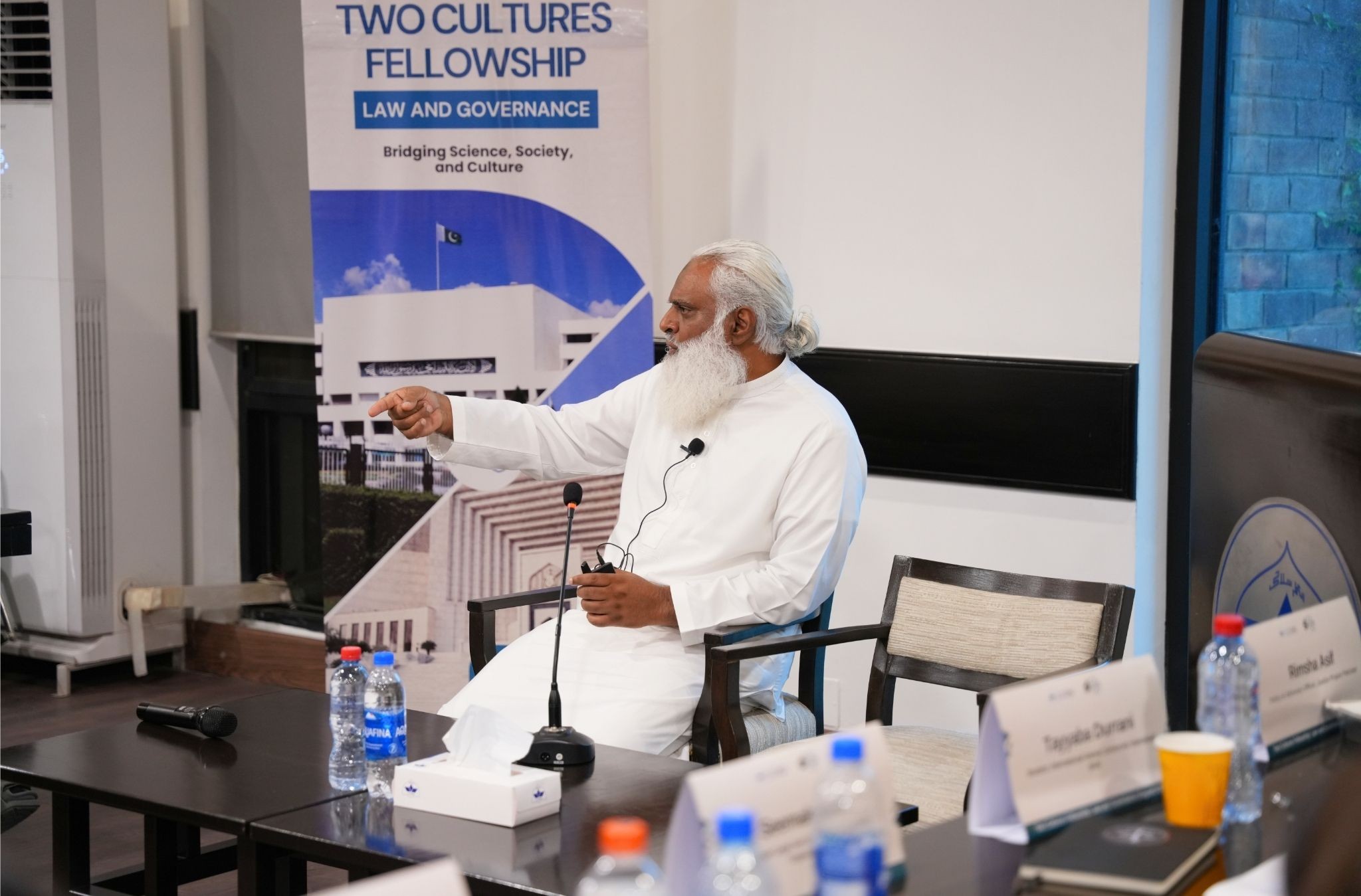
The Modern University & Academic Culture
Dr. Basit Bilal Koshul
Founding Director, Two Cultures Institute, LUMS
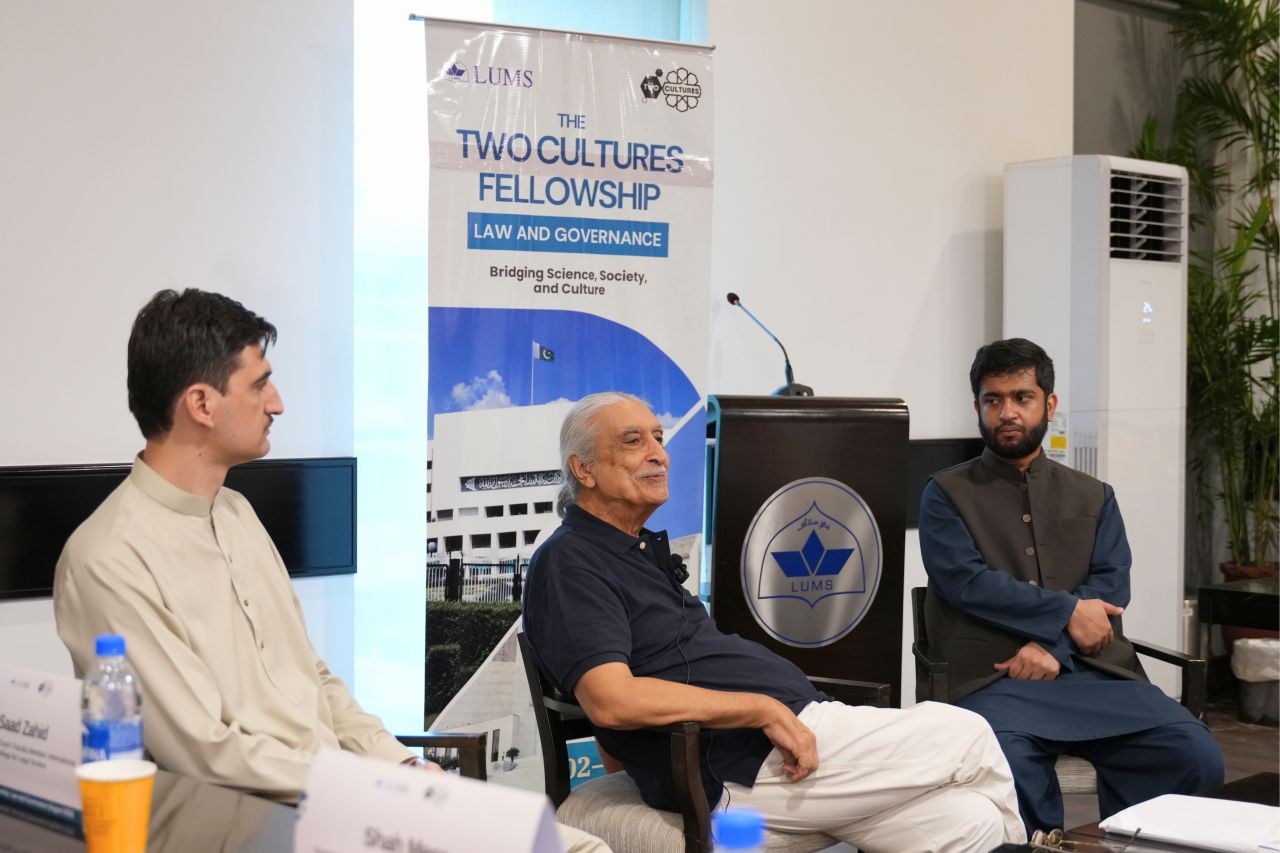
The Judiciary and the Constitutional Order
Justice (R) Jawwad S. Khawaja
Former Chief Justice of Pakistan
Read more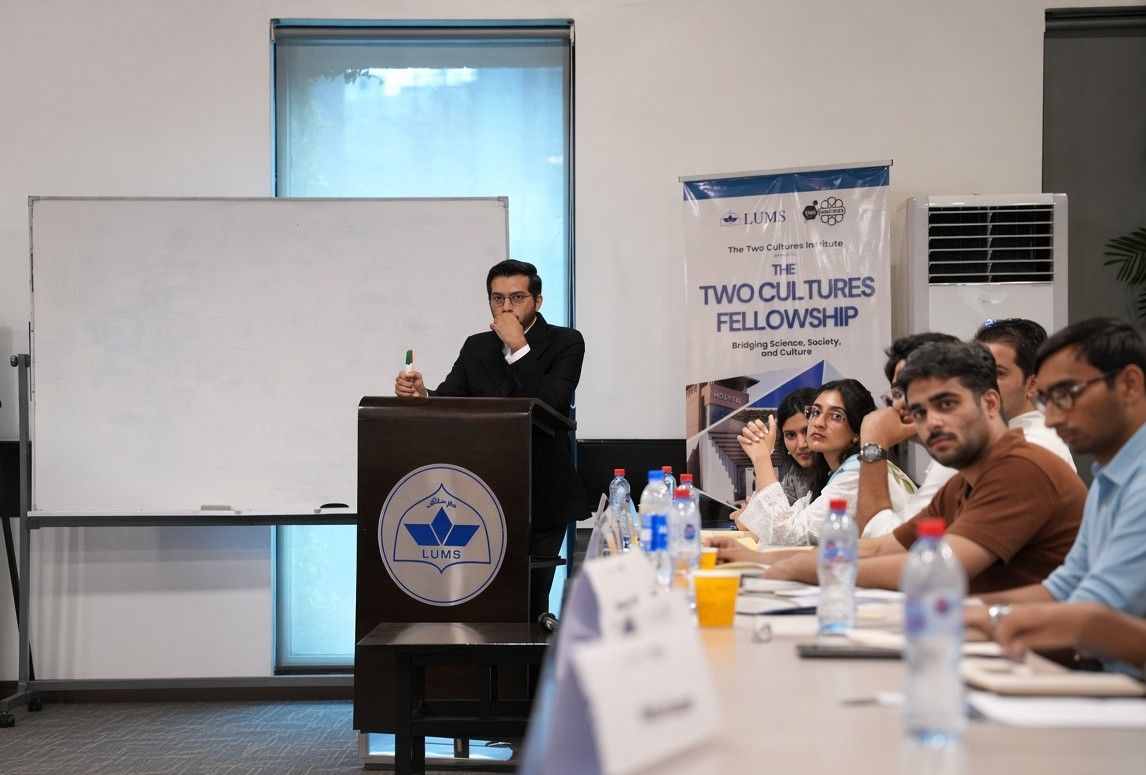
Introduction to the Two Cultures in Sciences & Humanities
Rehman Ur Rauf
CEO, Carte Blanche Innovation Initiative
Read more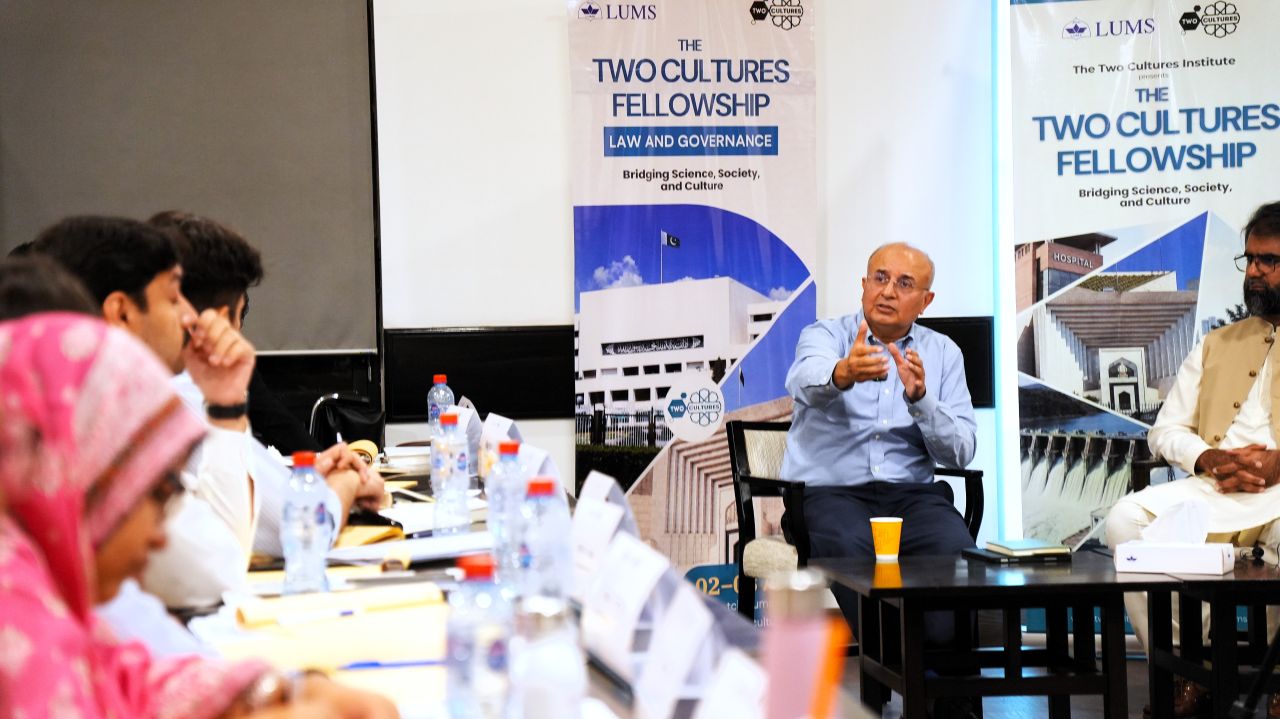
The Legal System from the Inside: Delay, Access, and Reform
Justice (R) Syed Mansoor Ali Shah
Professor of Practice, SAHSOL, LUMS · Former Senior Puisne Judge, Supreme Court of Pakistan
Read more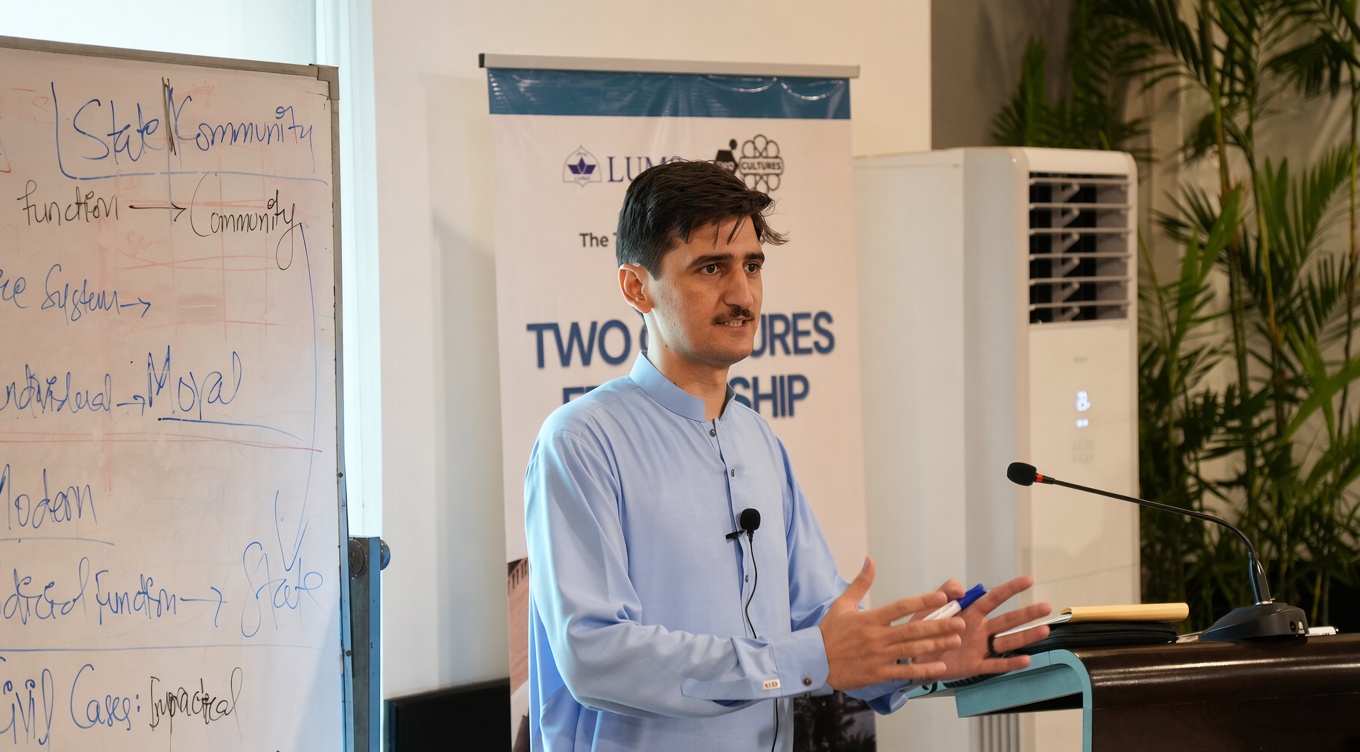
Law and National Character
Qayyim Khakwani
Research Fellow, Two Cultures Institute
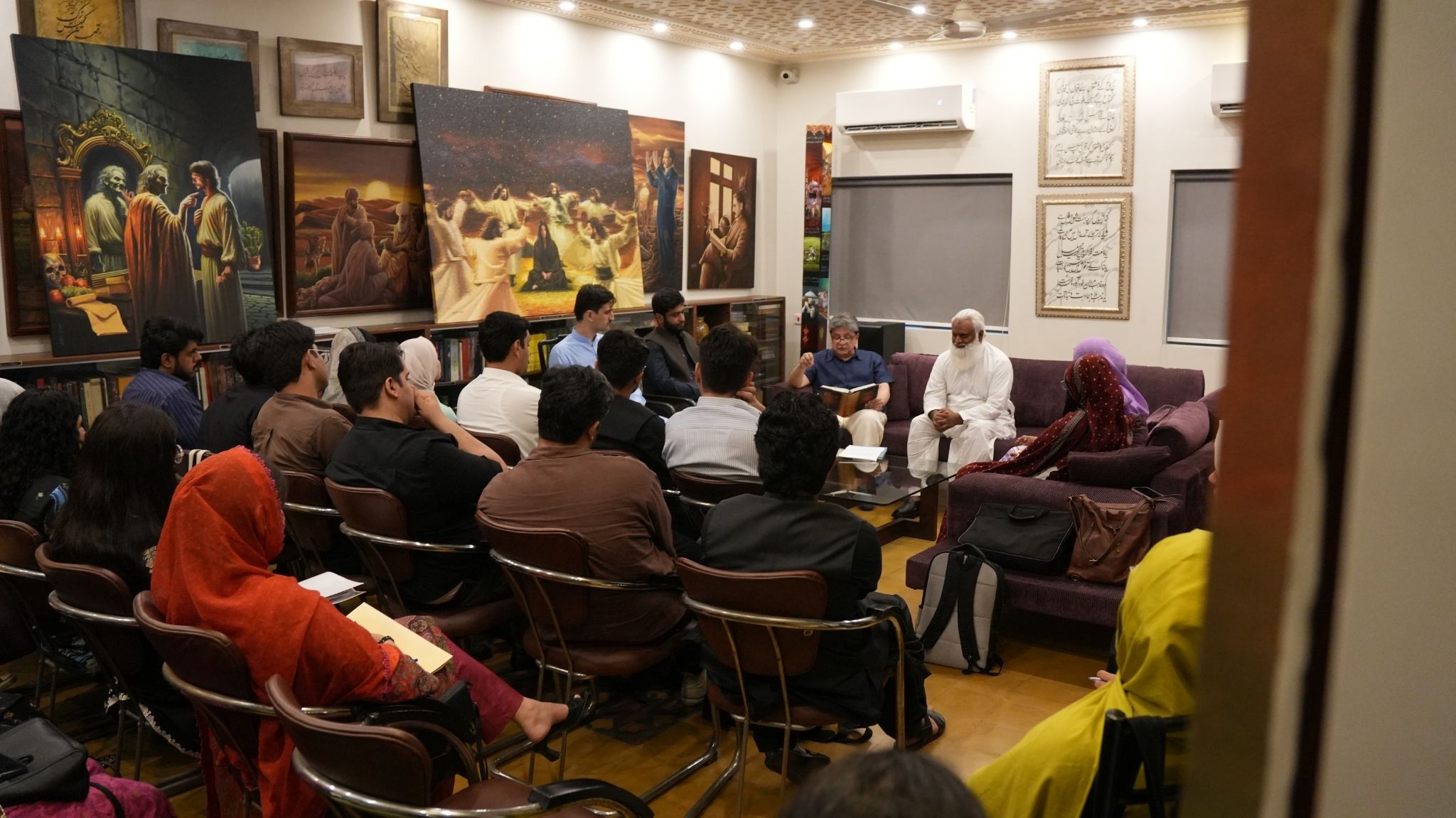
Urooj-e-Adam-e-Khalil: Iqbal's Vision at Dabistan-e-Iqbal
Mian Iqbal Salahuddin
President, Dabistan-e-Iqbal
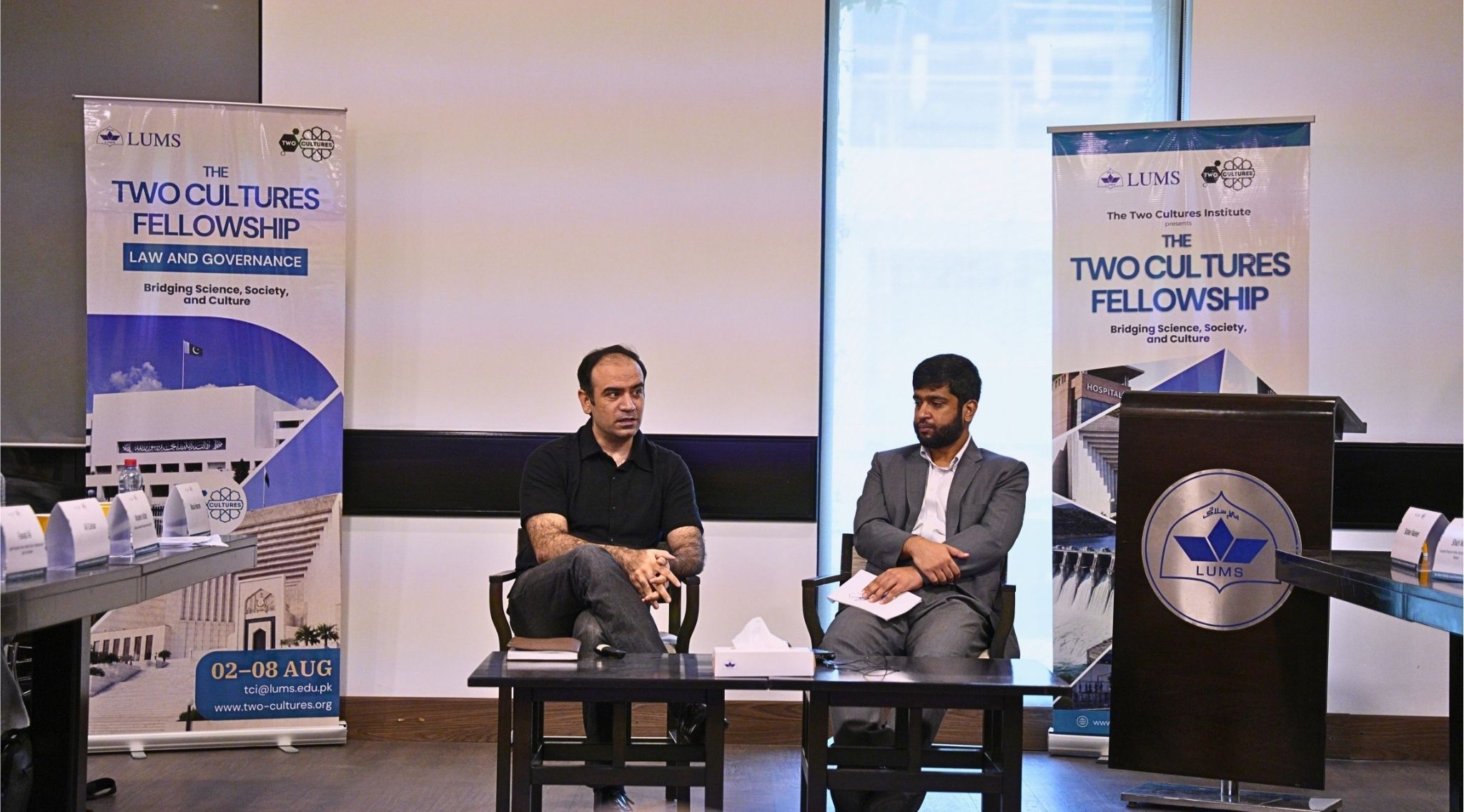
From Cooperative to Militarized Federalism: An Institutional Analysis
Dr. Salman Rafi Sheikh
Assistant Professor of Politics, LUMS
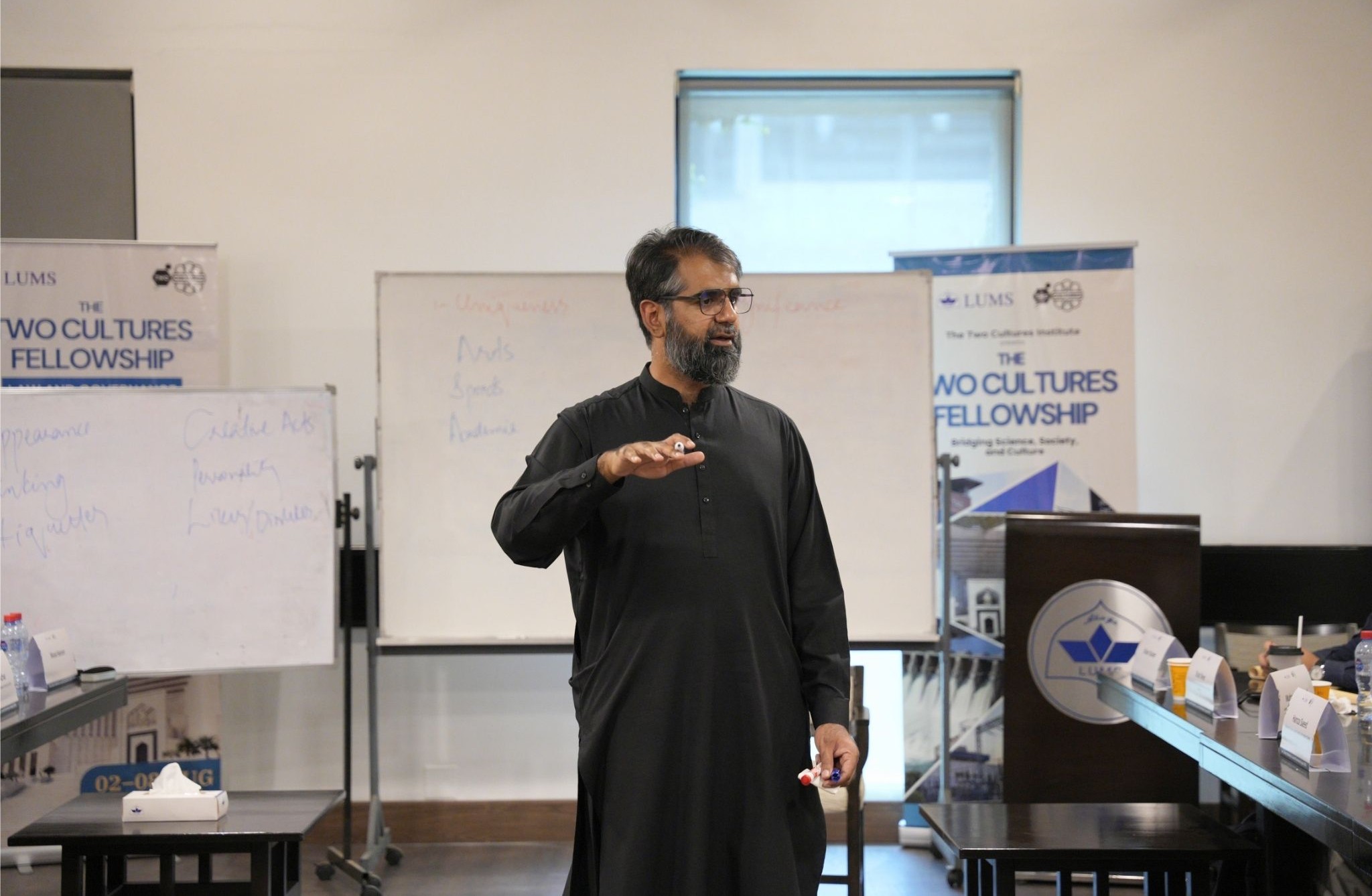
Community and Creativity
Dr. Muhammad Azam Khalid
Assistant Professor, LUMS
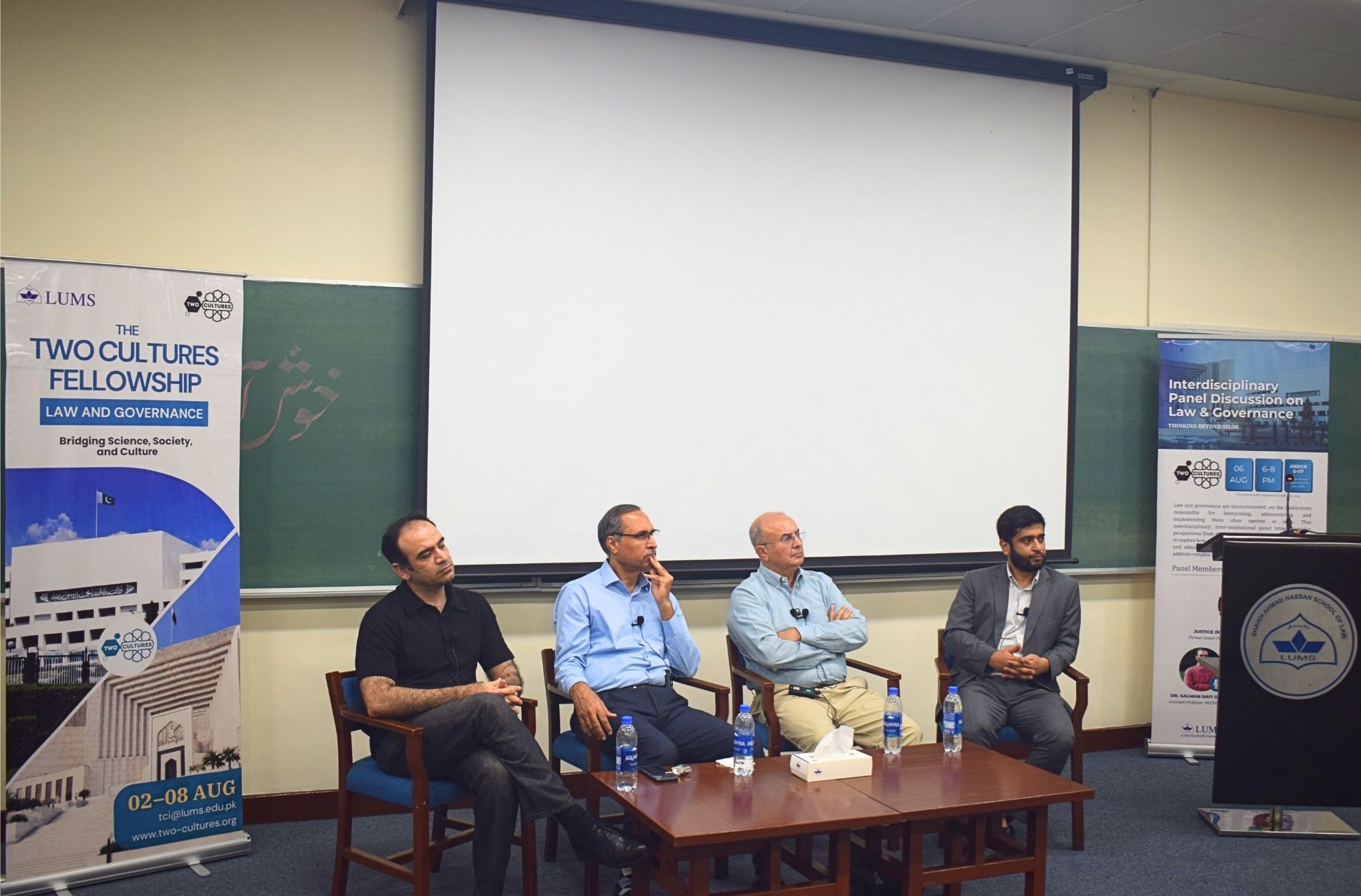
Interdisciplinary Panel Discussion
Justice (R) Syed Mansoor Ali Shah · Dr. Muhammad Ahsan Rana · Dr. Salman Rafi Sheikh
Moderated by Ammar Qaseem
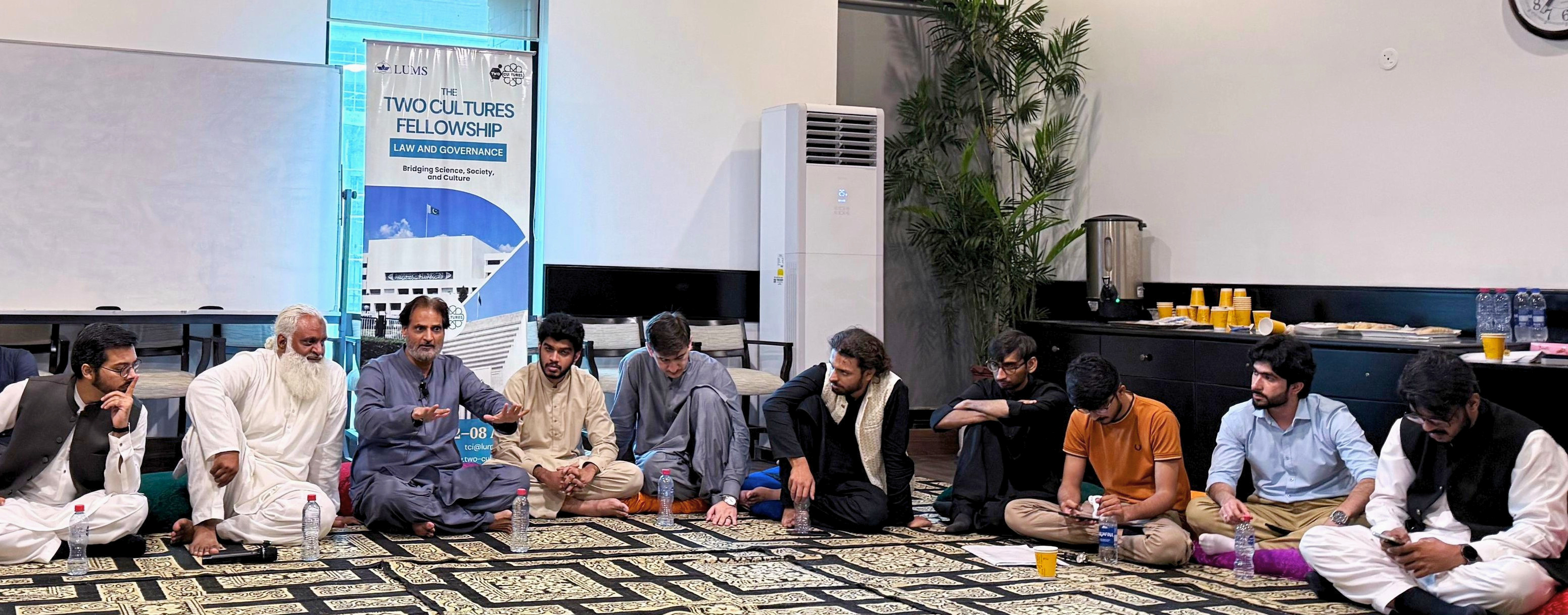
Cultural Learning Session
Mr. Younis
The Cohort
Twenty-five participants were selected from over 2,300 applicants. They came from across Pakistan — Punjab, Sindh, Balochistan, and Islamabad — and from a range of disciplines and backgrounds: law, policy, academia, the civil service, human rights, and beyond. Sixty-two percent of the cohort were women.